The short answer
- Use breed type as a rough guide, from about 30 minutes for small companion breeds to over two hours for working dogs.
- Count training, scent games and puzzle feeders as exercise, especially for high-drive working breeds that get frustrated with walks alone.
- Treat the puppy five-minute rule as a rough ceiling, let puppies play freely on soft ground, and limit stairs and fetch.
- Walk at the coolest times on warm days and test the pavement with the back of your hand for seven seconds.
- Keep flat-faced dogs on short, slow walks with a harness, and skip exercise altogether in warm or humid weather.
Most healthy adult dogs need somewhere between 30 minutes and more than two hours of exercise a day, and breed type is the biggest single factor. Small companion breeds are often content with around half an hour plus play, while working and sporting breeds like Border Collies and Labradors are listed by The Royal Kennel Club as needing more than two hours. Puppies, senior dogs and flat-faced breeds need a gentler, more tailored approach, and heat changes everything.
Exercise needs by breed type
Breed guidance is a starting point, not a prescription. Individual dogs vary a lot, and a fit, young Cavalier may outlast an overweight, middle-aged Labrador. The figures below come from The Royal Kennel Club’s breed profiles, which classify each breed’s daily exercise needs.
| Breed type | Examples | Typical daily exercise (adult) | Good kinds of exercise |
|---|---|---|---|
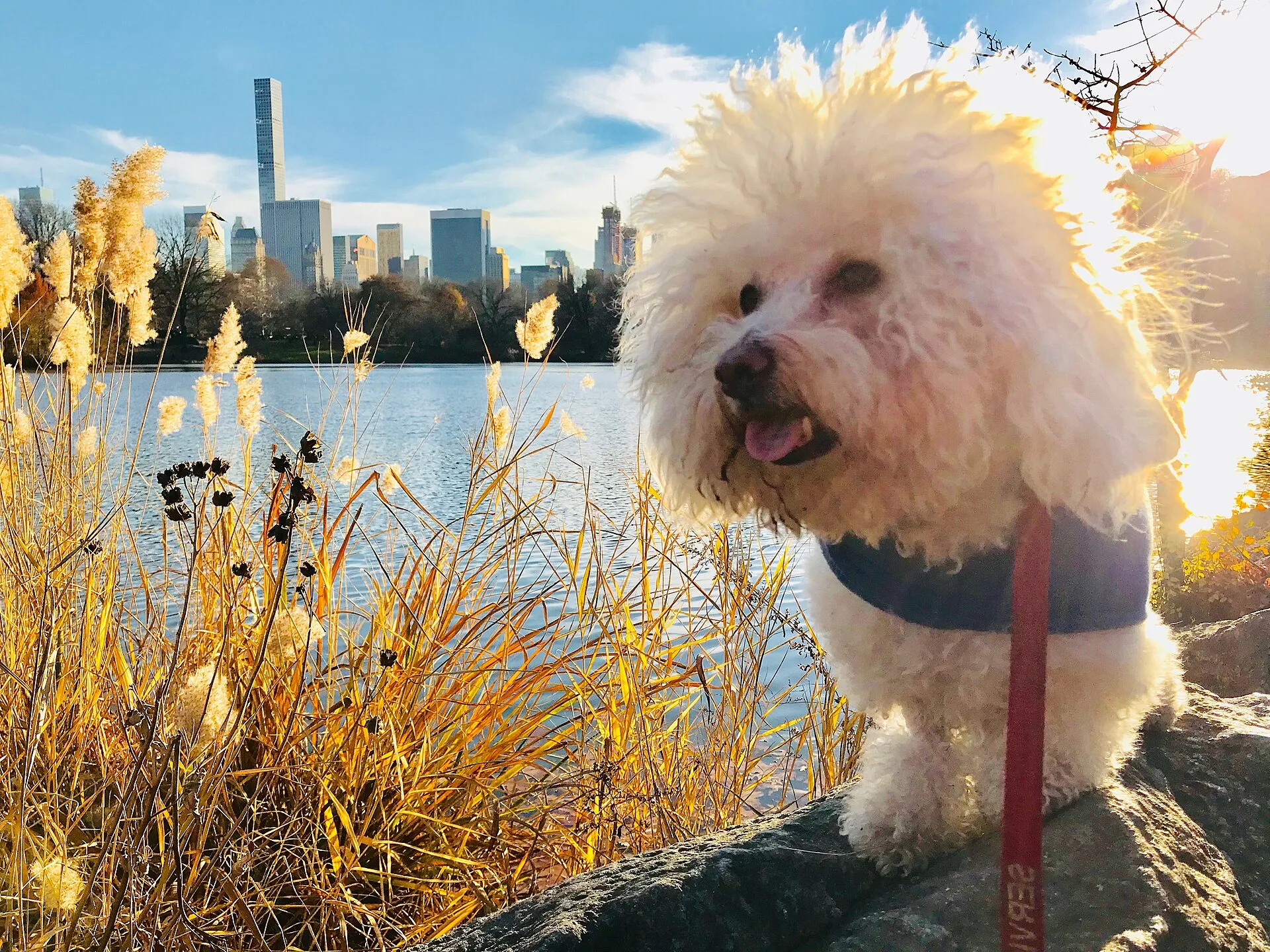
| Small companion / toy | Bichon Frise, Chihuahua, Havanese | Up to about 30 minutes | Short walks, indoor games, sniffing |
| Small to medium all-rounders | Cavalier King Charles Spaniel, Shih Tzu, Miniature Poodle, Beagle, Border Terrier | Up to about 1 hour | Walks, sniff and search games, training |
| Sighthounds | Greyhound, Whippet | Up to about 1 hour | Walks plus a safe off-lead sprint in a secure area |
| Flat-faced breeds | French Bulldog, Pug, Bulldog | Up to about 1 hour, in short gentle sessions | Slow walks in cool weather, brain games |
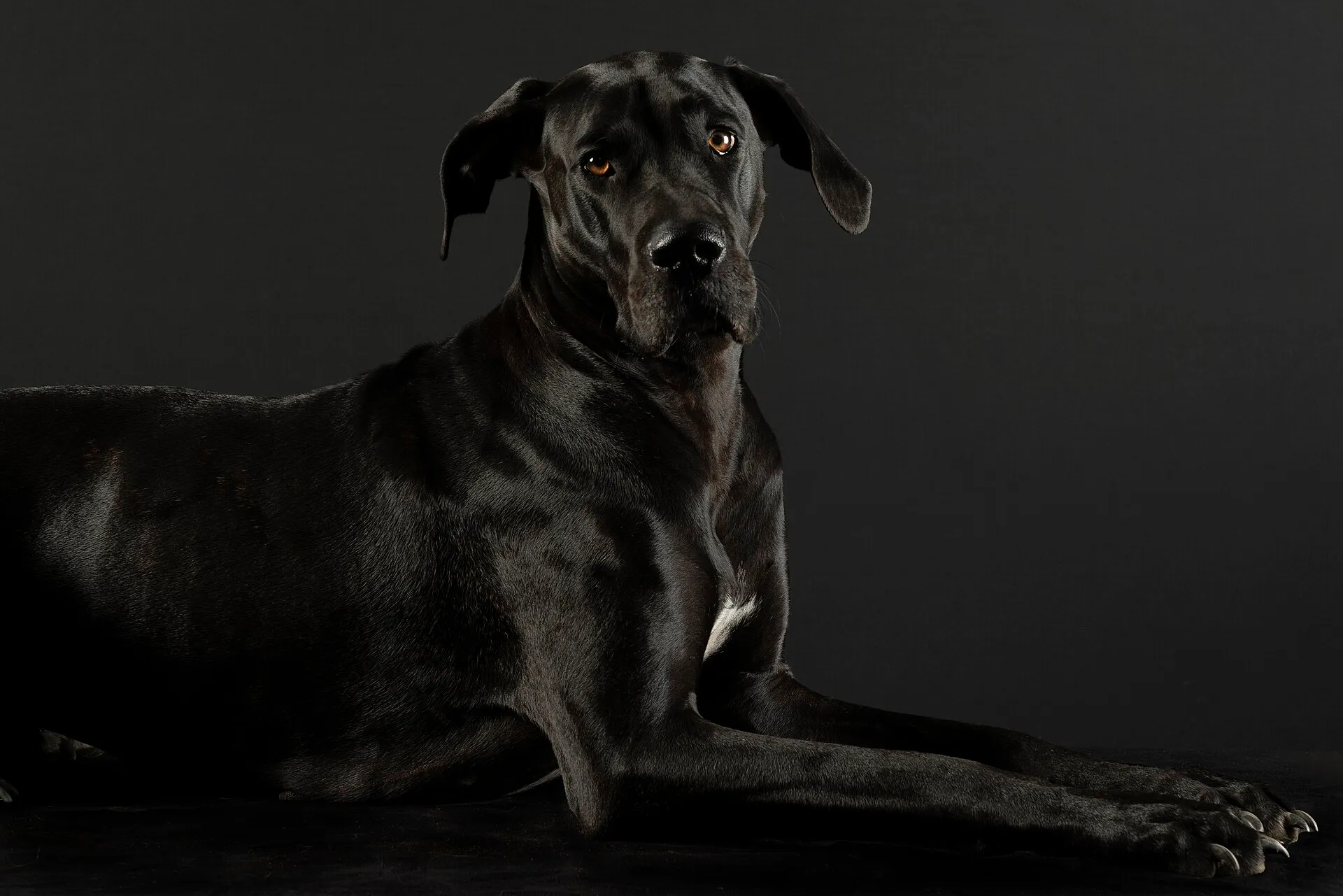
| Working, herding and gundogs | Border Collie, Labrador Retriever, Siberian Husky | More than 2 hours | Long walks, off-lead running, scent work, dog sports |
A few things the table can’t tell you:
- Mental work counts. Training sessions, scatter feeding, puzzle feeders and scent games tire many dogs as effectively as extra kilometres. This matters most for high-drive working breeds, which can become frustrated with walks alone.
- Sighthounds are sprinters. Greyhounds and Whippets often need less than people expect, and many are champion sofa occupiers between bursts of speed.
- Terriers and hounds can surprise you. The Royal Kennel Club notes that Border Terriers have moderate to high needs for their size, and scent hounds like Beagles tend to follow their noses, so secure areas matter more than distance.
- Crossbreeds and rescues: look at the likely mix, then watch the dog. A dog who is restless, destructive or can’t settle in the evening may need more exercise or more mental work. One who flags halfway round needs less.
The PDSA puts it simply: some breeds need at least one to two hours a day, and working breeds need considerably more, but age, health and personality all shift that.
Puppies: the “5-minute rule” and what the evidence says
The rule
The Royal Kennel Club’s guideline is a ratio of five minutes of formal exercise per month of age, up to twice a day, until the puppy is fully grown. So a three-month-old puppy gets about 15 minutes of structured walking up to twice a day, a four-month-old about 20 minutes, and so on.
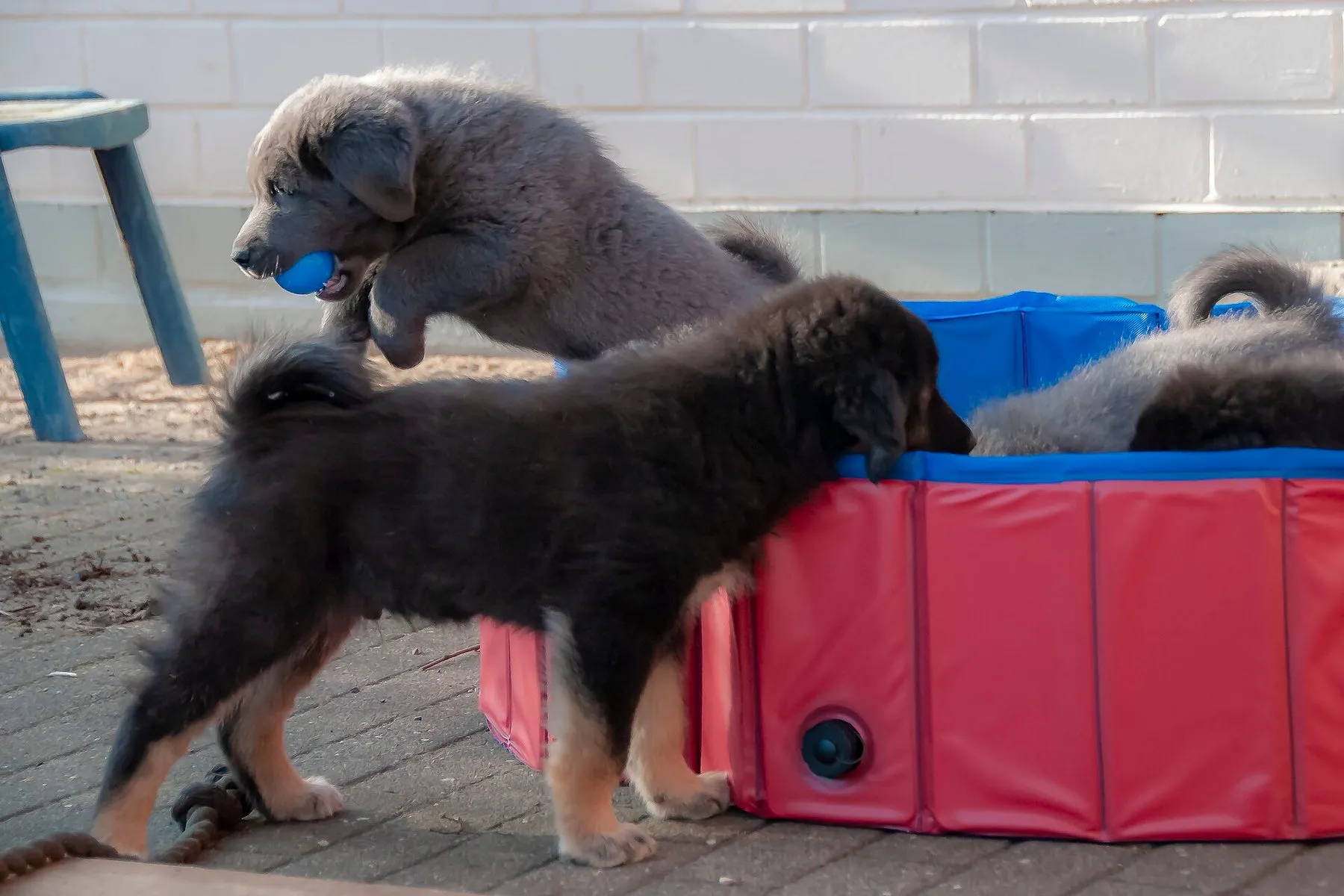
“Formal exercise” is generally taken to mean on-lead walks and structured activity, not a puppy pottering and playing in the garden at their own pace.
How strong is the evidence?
Honestly, weak. The Royal Kennel Club itself calls it a “rule of thumb”, and we could not find any study that tested the five-minute figure directly. It is a sensible-sounding way to stop owners marching young puppies on long walks, but the numbers are not derived from research.
The evidence that does exist is more nuanced than “less is better”. A Norwegian cohort study (Krontveit and colleagues, 2012) followed around 500 puppies of four large and giant breeds: Newfoundlands, Labrador Retrievers, Leonbergers and Irish Wolfhounds. It found:
- Using stairs daily from birth to three months was linked to a higher risk of hip dysplasia.
- Off-lead exercise in parks or on soft, gently uneven ground up to three months was linked to a lower risk.
So it isn’t simply that exercise harms growing joints. Free movement on soft ground looked protective, while repetitive strain on stairs did not. The study was observational, covered only four large breeds, and hip dysplasia is partly inherited, so it can’t tell us exact safe minutes for any puppy.
What we suggest for puppies
- Let them play freely at their own pace on grass and soft ground, and let them stop when they want.
- Keep on-lead walks short, using the five-minute guideline as a rough ceiling rather than a target.
- Limit repetitive high-impact activity: stairs (especially for large breeds), jumping out of cars, and endless ball throwing. The PDSA specifically warns that the sudden starts and stops of fetch put strain on growing joints.
- Avoid regular jogging or long runs on hard surfaces until your puppy has finished growing. Small breeds tend to finish growing sooner than giant breeds, which can still be growing well into their second year. Ask your vet when your dog is likely to be done.
- Socialisation and training count as enrichment, and they tire puppies out.
Senior dogs
Older dogs still need daily exercise to keep muscles, joints and weight in good shape, but usually less of it, and more gently. The PDSA notes that many older dogs have health conditions that limit what they can do, so check your dog’s routine with your vet.
Practical changes that help:
- Shorter, more frequent walks instead of one long one.
- Softer surfaces such as grass and forest paths rather than pavement.
- Swimming or hydrotherapy for dogs with arthritis, if your vet agrees.
- Warm-up time: let stiff dogs potter for a few minutes before anything brisk.
- Watch the next day. Stiffness, limping or reluctance to get up after a walk usually means it was too much.
A dog who has slowed down suddenly isn’t just “getting old”. Arthritis pain, heart disease, hypothyroidism and other treatable conditions often show up first as reluctance to walk.
Heat: when it’s too hot to exercise your dog
Exercise, not hot cars, is the most common cause of heatstroke in UK dogs. A VetCompass study of more than 900,000 dogs (Hall, Carter and O’Neill, 2020) found that 74% of heat-related illness cases with a known trigger followed exercise. Dogs Trust adds that 67.5% of cases followed walking, with no running or play involved, so even an ordinary walk can be too much on a hot day.
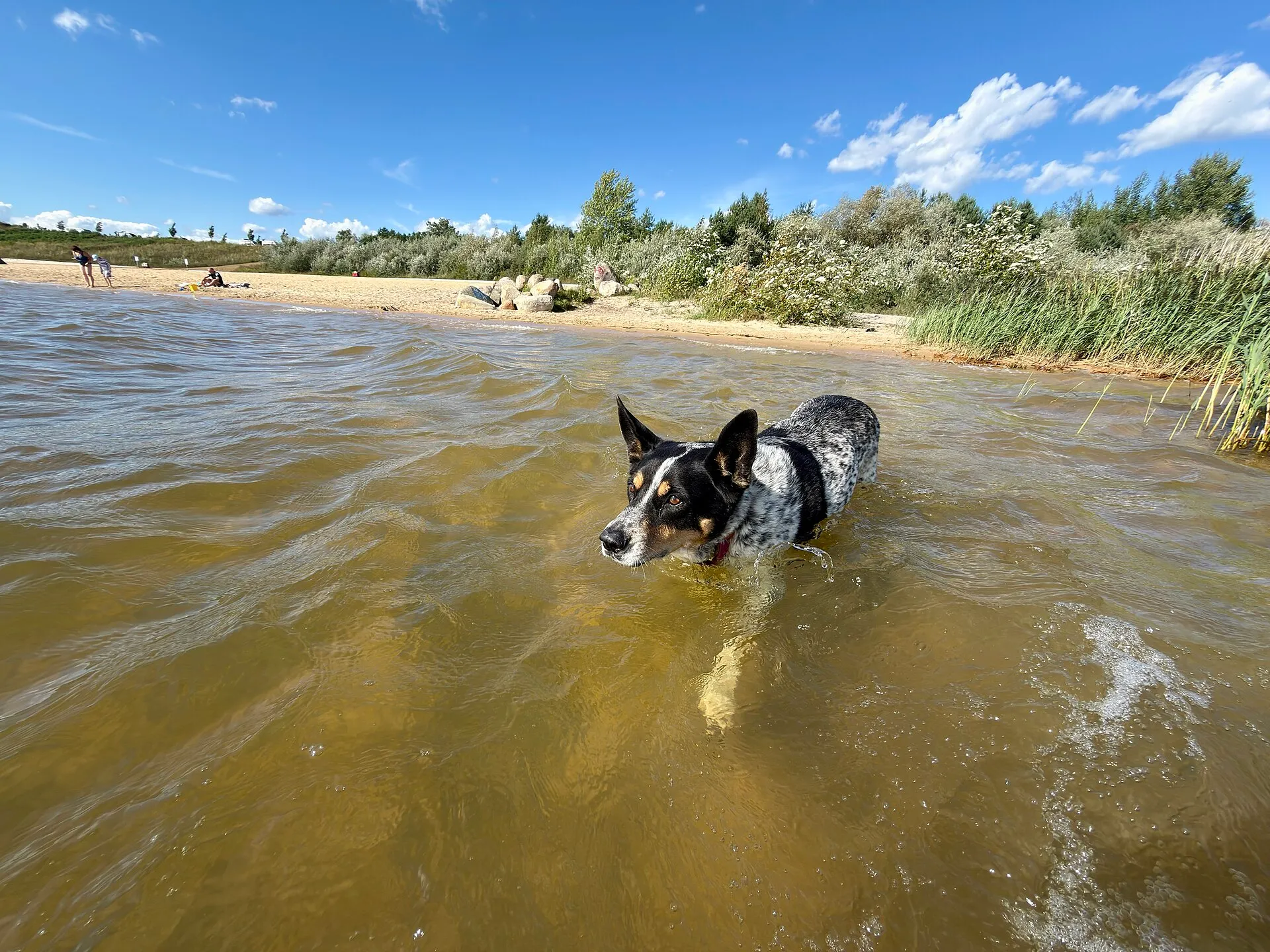
There is no single safe temperature. Dogs Trust reports heatstroke diagnosed at temperatures as low as 16.9°C (62°F), and it warns that exercising dogs in temperatures as mild as 21°C (70°F) can cause problems, particularly for flat-faced breeds. The Royal Kennel Club says most dogs are comfortable between 15°C and 25°C (59–77°F), depending on breed, age, coat, fitness and health.
Here is a working guide based on that advice. It is not a validated veterinary cut-off, and humidity, direct sun and your dog’s fitness all shift it.
| Air temperature | Fit, healthy, medium-coated dog | Higher-risk dogs* |
|---|---|---|
| Below 20°C (68°F) | Normal exercise for most dogs | Usually fine; watch for heavy panting |
| 20–24°C (68–75°F) | Walk in the cooler parts of the day; bring water | Short, slow walks in the early morning or late evening only |
| 25–27°C (77–81°F) | Short, gentle walks in shade at the coolest times; no running or ball games | Skip walks; brain games indoors |
| 28°C (82°F) and above | Skip walks or keep to a short toilet trip early or late | Toilet trips only; keep them cool indoors |
*Higher-risk dogs include flat-faced breeds, puppies, older dogs, overweight dogs, thick-coated breeds such as Chow Chows and Huskies, and dogs with heart or breathing problems.
More heat rules worth following:
- Test the pavement. The Royal Kennel Club suggests holding the back of your hand on it for seven seconds. If you can’t, it’s too hot for paws.
- Acclimatise. The first warm days of spring are risky, because dogs haven’t adjusted yet.
- Humidity matters. Panting cools a dog by evaporation, and it works less well in humid air, which is a real problem in places like Singapore, much of India and the US South.
- Young, energetic dogs were at higher risk of exercise-related heatstroke in the VetCompass data. They don’t know when to stop, so you have to decide for them.
See a vet now if: your dog is panting heavily and can’t settle after stopping, has bright red or dark gums, is drooling heavily, wobbly, confused, vomiting or has collapsed. Stop exercise, move them to shade and start cooling immediately with cool or room-temperature water on the body, plus a fan if you have one. Call your vet while you cool, then travel with the air conditioning on or windows open. Dogs Trust’s advice is “cool first, transport second”.
Flat-faced (brachycephalic) dogs need special care
Bulldogs, French Bulldogs, Pugs and other flat-faced breeds have narrowed airways that make panting less effective. The 2020 VetCompass study found that Bulldogs had about 3.7 times and French Bulldogs about 3 times the odds of exercise-related heat illness compared with Labradors, and brachycephalic dogs overall had higher odds for every heat trigger studied. Chow Chows topped the list for exercise-related cases at seven times the odds.
The University of Cambridge BOAS Research Group notes that dogs with normal airways breathe quietly. Snoring, snorting, noisy breathing during exercise, struggling to recover, and poor heat tolerance are signs of brachycephalic obstructive airway syndrome (BOAS), not breed quirks. For these dogs:
- Keep walks short and slow, and split them up through the day.
- Use a harness, not a collar, to keep pressure off the throat.
- Avoid exercise in warm or humid weather altogether.
- Keep them lean, because extra weight makes breathing harder.
- Ask your vet to assess their breathing. Surgery can help some dogs.
The bottom line
Match exercise to the dog in front of you: breed type sets the rough range, from about 30 minutes for small companion breeds to two hours or more for working dogs, and age, health and weather adjust it from there. The puppy five-minute rule is a cautious rule of thumb with little evidence behind its exact numbers, and free play on soft ground seems more useful than counting minutes. Older dogs do best with shorter, gentler, more frequent outings. In warm weather, walk early or late or not at all, and treat flat-faced breeds as high-risk from around 20°C (68°F).
Questions owners ask
Does playing in the garden count as exercise?
Yes, as part of it. Free play, sniffing and training games all count, and many dogs find a slow, sniffy walk as tiring as a brisk one. Most dogs still benefit from getting out of the home and garden every day for new smells and sights.
Can a dog get too much exercise?
Yes. Signs include lagging behind, stiffness the next day, sore or worn pads and reluctance to go out. Repetitive high-impact activity such as endless ball chasing can strain joints, particularly in young and older dogs. Build up distance gradually, as you would for yourself.
When can my puppy go running with me?
Most vets advise waiting until a dog has finished growing before regular jogging on hard surfaces. That is often around a year for small breeds and up to 18 months or more for large and giant breeds. Ask your vet for advice specific to your dog's breed and build.
Is it ever too cold to walk a dog?
Small, short-coated, very young, old and thin dogs feel cold quickly, so a coat and shorter walks help in freezing weather. Rinse paws after walking on salted or gritted roads, and keep dogs away from frozen ponds and lakes.
Sources
- The Royal Kennel Club — Dog walking and puppy exercise
- PDSA — How much exercise does your dog need?
- Krontveit et al. (2012), American Journal of Veterinary Research — Housing- and exercise-related risk factors for hip dysplasia
- ScienceDaily — Puppies' environment affects risk of hip dysplasia (Norwegian School of Veterinary Science)
- Hall, Carter & O'Neill (2020), Animals — Exertional heat-related illness is a greater threat to UK dogs
- Dogs Trust — Caring for your dog during hot weather
- The Royal Kennel Club — Walking your dog on warm days
- University of Cambridge BOAS Research Group — Recognition and diagnosis of BOAS
This guide is general information, not a substitute for advice from a vet who has examined your dog. Every claim is checked against the sources above. How we research and fact-check. Spotted an error? Tell us.