The short answer
- Build crate time in small stages, from open door and treats to meals inside, and move on only when your puppy is relaxed.
- Choose a crate your dog can stand, turn around, lie down and stretch out in, using a divider while your puppy grows.
- Let your puppy out only after a short pause in the crying, so they don't learn that howling opens the door.
- Keep the crate in or next to your bedroom for the first few weeks so your puppy can hear you at night.
- Stop and talk to your vet if your puppy panics, hurts themselves trying to escape or keeps soiling the crate.
Most puppies can learn to settle happily in a crate within one to three weeks if you build it up in small steps: open door and treats first, then meals inside, then the door closed while you’re nearby, and only then short absences. Expect several days per stage rather than several stages per day. Keep daytime stretches short, because young puppies cannot hold their bladder for long, and never use the crate as punishment.
What a crate is for (and what it isn’t)
A crate is a den, a travel box and a house-training aid. Used well, it gives a puppy a predictable place to sleep and keeps them out of trouble when you can’t watch them for a short while.
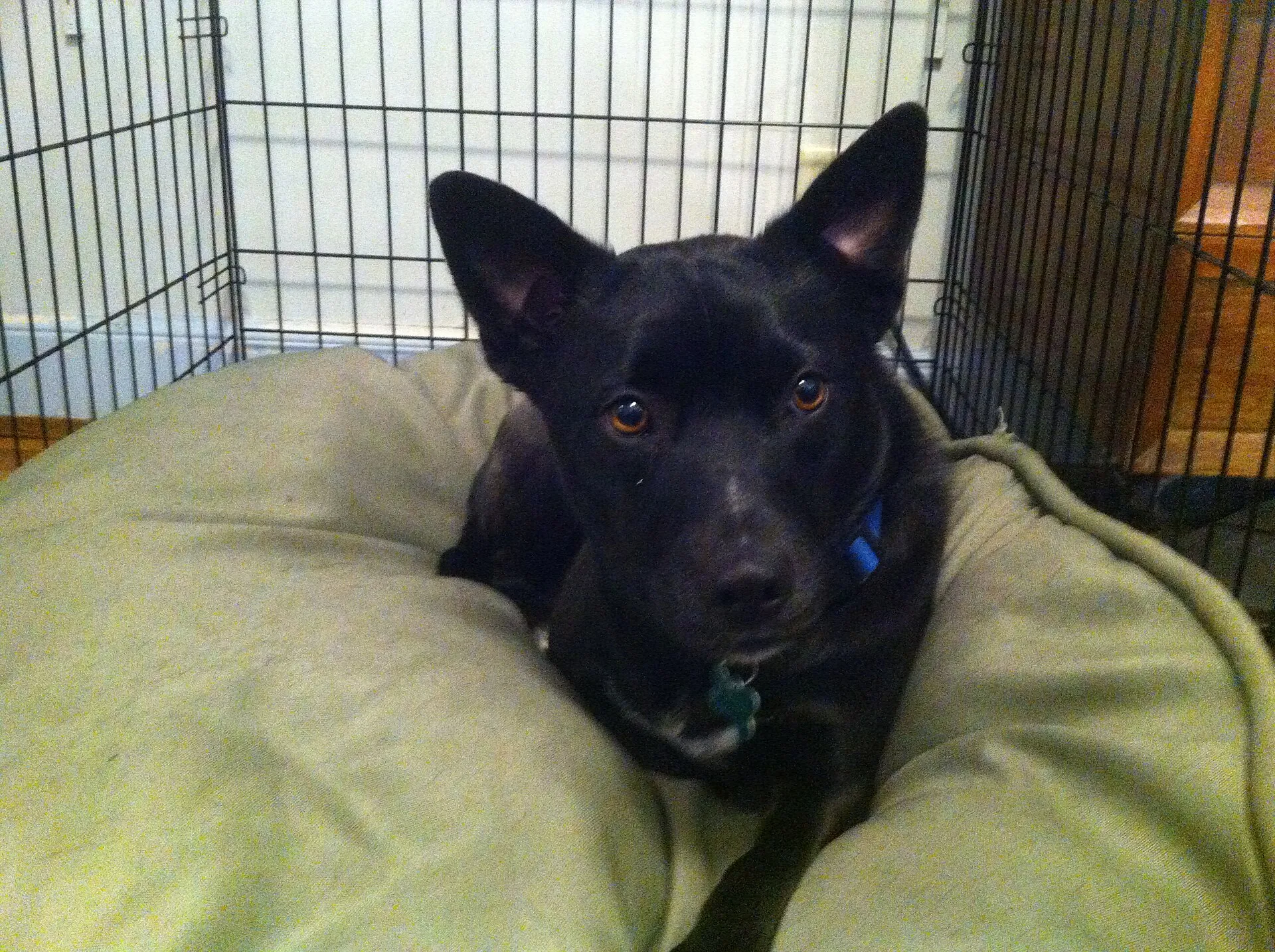
It isn’t storage. The RSPCA says leaving a dog crated all day while you’re at work is never acceptable, and Humane World for Animals warns against a dog spending most of their day and night in one. A crate also doesn’t fix separation anxiety. A distressed dog may hurt themselves trying to get out, so if your puppy panics when alone, see our guide to separation anxiety and talk to your vet.
Choosing the right crate size
The rule from welfare charities on three continents is the same: your dog should be able to stand up, turn around, lie down and stretch out comfortably.
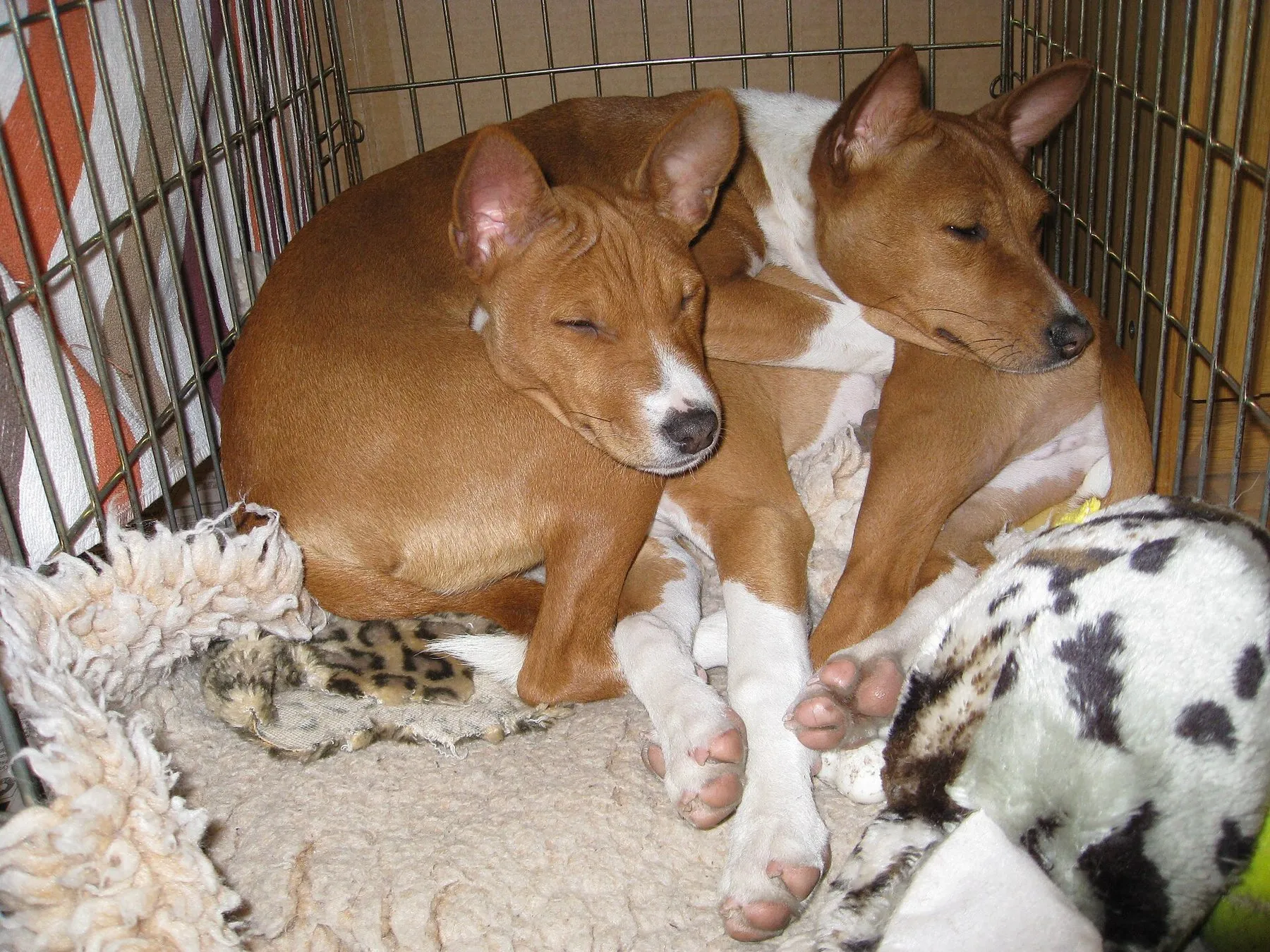
For a growing puppy you have two sensible options:
- Buy the adult-size crate now and fit a divider. Many wire crates come with one. Move it back as your puppy grows. This stops a small puppy from using one end as a toilet and sleeping at the other.
- Buy small now, upgrade later. Cheaper at first, but most puppies outgrow a small crate within months.
To estimate adult size, check the breeder’s information on the parents or ask your vet. For a crossbreed or rescue puppy of unknown parentage, a divider crate is the safer bet.
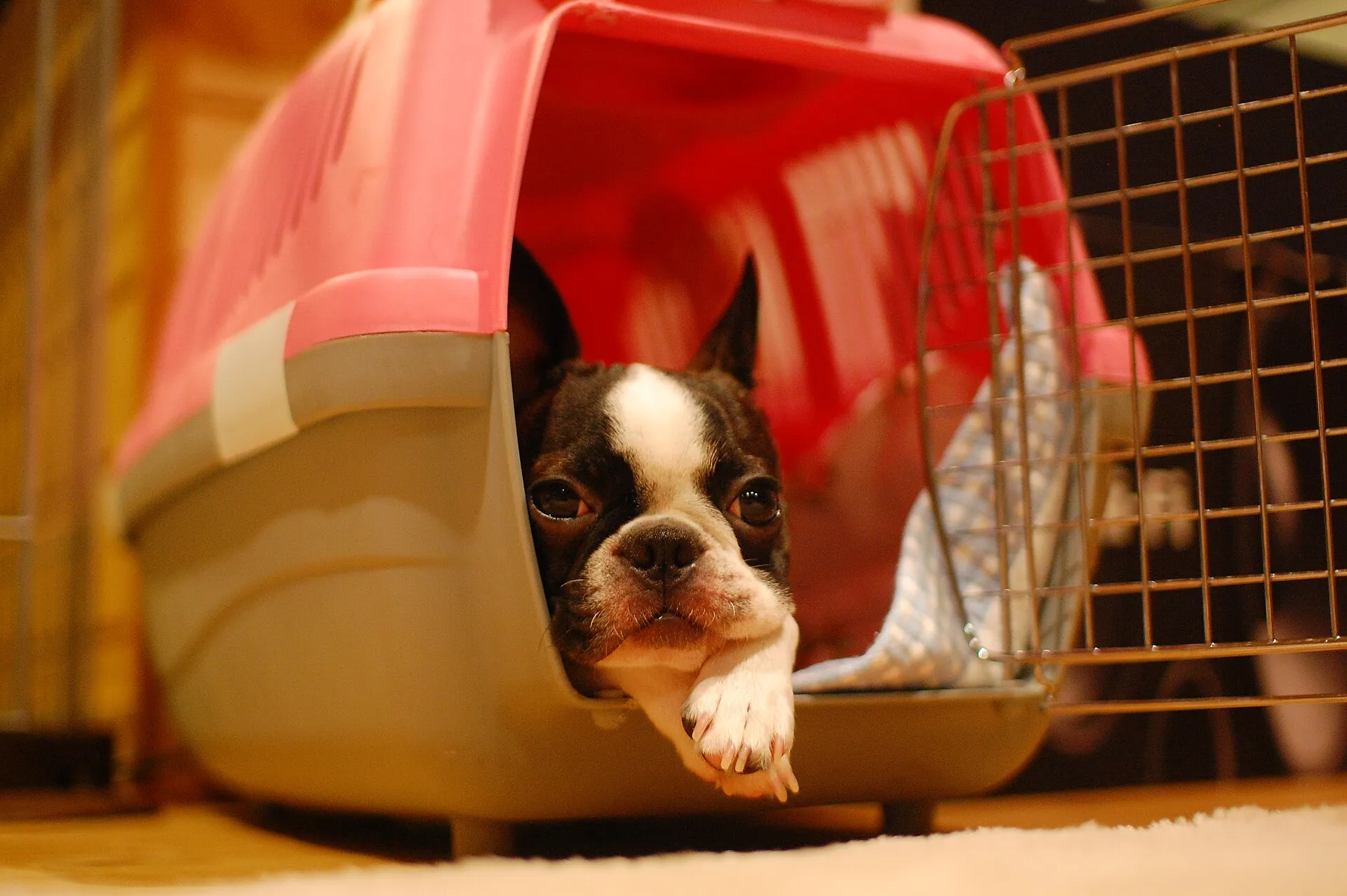
Type matters less than fit. Wire crates are airy and easy to clean. Plastic “flight” kennels feel more enclosed and suit travel. Fabric crates are light but easy to chew through, so they’re a poor first crate for a teething puppy. The RSPCA also notes that an adult-size crate is too big for a small puppy to travel in safely, because a snug space protects them better if the car brakes hard.
The step-by-step plan
Each stage below lasts as long as your puppy needs. Some fly through a stage in an afternoon. Others need a week. The RSPCA puts it plainly: progress can take several minutes or several days. Move on when your puppy is relaxed at the current stage, not when the calendar says so.
Stage 1: Make the crate boring and good (days 1–3)
- Put the crate in a busy part of the home, such as the living room, with soft bedding inside.
- Fix the door open so it can’t swing shut and startle them.
- Toss treats just inside, then further in. Let your puppy walk in and out freely.
- Keep sessions to about three minutes, several times a day.
Do not push or carry your puppy in at this stage. The goal is a puppy who wanders in on their own to see if anything good has appeared.
Stage 2: Meals in the crate (days 2–7)
- Feed every meal in the crate, starting near the entrance and moving the bowl further back each time.
- Once your puppy eats calmly inside, close the door during the meal and open it as soon as they finish.
- Over several meals, leave the door shut a little longer after eating, building up to about ten minutes.
If your puppy whines when the door is closed, you went too fast. Shorten the time at the next meal.
Stage 3: Door closed, you nearby (week 1–2)
- Pick a cue word, such as “bed”, toss a treat in and close the door.
- Give a long-lasting chew or a food toy stuffed with part of their daily food.
- Sit beside the crate for a few minutes, then go into the next room briefly and come back.
- Build up gradually. The RSPCA suggests working towards around half an hour, practising at different times of day.
Release your puppy when they’re quiet. If you open the door mid-howl, you teach them that howling opens doors. Wait for a short pause, even a breath, then let them out calmly.
Stage 4: Short absences (week 2–3 onwards)
- Once your puppy relaxes for 30 minutes with you in another room, start leaving the house for a few minutes.
- Before you go, make sure they have had a toilet break, some play or a short walk, and a small meal or chew.
- Keep departures and returns low-key. No long goodbyes, no big reunion party.
- Vary when you crate them before leaving. Humane World suggests anywhere from 5 to 20 minutes beforehand, so the crate doesn’t become a signal that you’re about to vanish.
Nights
For the first few weeks, put the crate in or right next to your bedroom. A young puppy who wakes alone in a strange house is understandably upset, and being able to hear and smell you helps. It also means you’ll hear them when they need the toilet. Once they sleep through the night reliably, you can move the crate to wherever you want it long term.
How long can a puppy stay in a crate?
There is no precise scientific limit, and the charities don’t agree on exact numbers. The figures for older puppies and adults come from the RSPCA, SPCA New Zealand and Humane World for Animals. The figures for very young puppies are our own cautious suggestions, set well inside those limits. All of them are maximums for a puppy who is already comfortable in the crate, not targets.
| Age | Daytime stretch in the crate | Notes |
|---|---|---|
| 8–10 weeks | Up to about 1 hour | Many need a toilet trip every hour or so when awake, and often once or twice overnight |
| 10–16 weeks | 1–2 hours | Toilet break straight after waking, eating and play |
| 4–6 months | 2–3 hours | SPCA NZ advises no more than 2–3 hours by day for puppies under six months; Humane World’s ceiling is 3–4 hours |
| Adult (crate-trained) | About 3 hours | RSPCA guidance; never all day |
Night-time is different because puppies sleep, but most young puppies still need at least one toilet trip overnight for the first weeks. If your puppy keeps soiling the crate, the stretches are too long, the crate is too big, or there may be a medical problem such as a urinary tract infection. Mention it to your vet.
You’ll see a popular rule that a puppy can hold on for “their age in months plus one hour”. Humane World uses it as a rough guide. Treat it as an outer limit for a sleeping puppy, not something to plan your working day around.
Common crate training mistakes
- Rushing the stages. The most common cause of a crate-hating puppy is going from “explores with door open” to “shut in for two hours” in a weekend.
- Using the crate as punishment. If the crate is where they go after stealing a sock, it stops being a safe place.
- Letting them out for crying. Wait for a pause. If they cry for long, go back a stage next time.
- Crating for too long. Long confinement without exercise and company leaves puppies frustrated, and SPCA NZ notes it can affect muscle condition.
- Letting children or visitors poke, tap or peer in. The crate should be the one place where your puppy is left alone to rest.
- Hot spots. Keep the crate out of direct sun and away from radiators.
- Expecting a crate to cure separation distress. If your puppy drools, pants, chews the bars or tries to escape, stop and get help.
Stop and get advice if: your puppy hurts themselves trying to escape, has bent bars or bleeding gums or claws, soils the crate repeatedly despite short stretches, or is still frantic after a couple of weeks of slow progress. Start with your vet, who can rule out medical causes and refer you to a qualified behaviourist.
Crate rules differ by country
Crating is normal in North America, the UK and Australia, but not everywhere.
Sweden is the best-known exception. The Swedish Board of Agriculture’s regulations on keeping dogs and cats (SJVFS 2020:8) say a dog’s freedom of movement may not be restricted except in listed cases. A dog may be shut in a space smaller than the legal minimum sizes for as long as a necessary task takes, such as care or cleaning, while someone keeps watch. It may also be kept temporarily in a smaller space during transport and overnight stays when travelling, in places where pets aren’t allowed, or during activities for training and occupation. The official general advice gives examples such as shows, competitions, trials, hunting and training, and counts house-training young animals in a small pen as justified. Routine crating at home, overnight or while you’re at work, is not among the listed cases. The same rules say dogs must be gradually accustomed to being left alone, and the general advice is to take dogs out at least every six hours during the day, more often for young and old dogs.
Other countries have their own rules on how dogs may be housed. Wherever you live, check your national animal welfare regulations or ask a local vet before planning around a crate. A puppy pen or a puppy-proofed room can do most of the same job.
Alternatives if a crate isn’t right
Some dogs never accept a crate, and some owners prefer not to use one. Options include:
- A puppy pen (exercise pen) with bedding at one end and a toilet area at the other
- A puppy-proofed kitchen or utility room behind a baby gate
- A tether in a small space, under supervision only
Whatever you choose, the training principles are the same: start short, pair it with good things, and build up slowly.
The bottom line
Crate training works best when it’s slow and dull: open door, treats, meals, then short spells with the door shut while you’re nearby. Size the crate so your puppy can stand, turn and stretch out, and keep daytime stretches short, measured in an hour or two for young puppies. If your puppy panics rather than protests, stop and talk to your vet. And if you live somewhere like Sweden, check what the law allows before you buy one.
Questions owners ask
Should I cover my puppy's crate?
Many puppies settle better with a light blanket over the top and sides, because it cuts visual distractions. Leave at least one side open for airflow, and never cover a crate in a warm room or direct sun.
Is it cruel to crate a puppy at night?
Not if the puppy has been introduced to the crate gradually, sleeps near you at first and gets toilet breaks. A 2024 UK study even found puppies confined to a crate or room overnight before 16 weeks had lower odds of separation-related behaviour, although it could not prove cause and effect.
My puppy cries in the crate. Should I let them out?
Wait for a brief pause in the noise before opening the door, so the puppy doesn't learn that crying opens it. If the crying is intense or lasts more than a few minutes, you have moved too fast. Go back a step, and check whether they simply need the toilet.
Can I put water in the crate?
For longer daytime stretches, a clip-on water bowl is a good idea, and the RSPCA recommends one. Many owners lift water an hour or two before bedtime for a healthy puppy to reduce night-time accidents, but check with your vet if your puppy has any health issue.
Do I have to crate train my puppy?
No. A puppy pen, a puppy-proofed room or a baby gate can do the same job. Crate training is most useful for travel, vet stays and house training. In some countries, including Sweden, the law only allows dogs to be confined in small spaces in specific situations, such as travel or training.
Sources
- RSPCA — Crate training dogs
- Humane World for Animals — Crate training 101
- SPCA New Zealand — How to crate train your dog
- Statens jordbruksverk — SJVFS 2020:8, regulations and general advice on keeping dogs and cats (Sweden, official PDF)
- Royal Veterinary College — Risk factors for puppies developing separation-related behaviours
- RSPCA — Recognising separation-related behaviour in dogs
This guide is general information, not a substitute for advice from a vet who has examined your dog. Every claim is checked against the sources above. How we research and fact-check. Spotted an error? Tell us.