The short answer
- Brush your dog's teeth daily with pet toothpaste, building up over one to two weeks, and never use human toothpaste.
- Skip antlers, real bones and hard nylon chews; if you can't dent a chew with your thumbnail, it's too hard.
- Look for the VOHC seal on dental chews and additives, and treat them as extras alongside brushing rather than replacements.
- Choose professional cleaning under anaesthesia over anaesthesia-free cleaning, which misses disease below the gumline and can give false reassurance.
- Give small and older dogs extra attention, because they carry the highest risk of periodontal disease in the RVC study.
Good dog dental care comes down to three habits: brush your dog’s teeth daily with a pet toothpaste, avoid chews hard enough to crack teeth, and have your vet examine the mouth at every check-up, with a cleaning under general anaesthesia when it’s needed. Gum disease (periodontal disease) is the most commonly diagnosed health problem in UK dogs, and much of it happens below the gumline where you can’t see it.
How common is dental disease in dogs?
Very. A Royal Veterinary College study of 22,333 dogs seen at UK first-opinion vet practices found that 12.5% were diagnosed with periodontal disease in a single year. That made it the most common diagnosis of all, ahead of ear infections (7.3%) and obesity (7.1%).
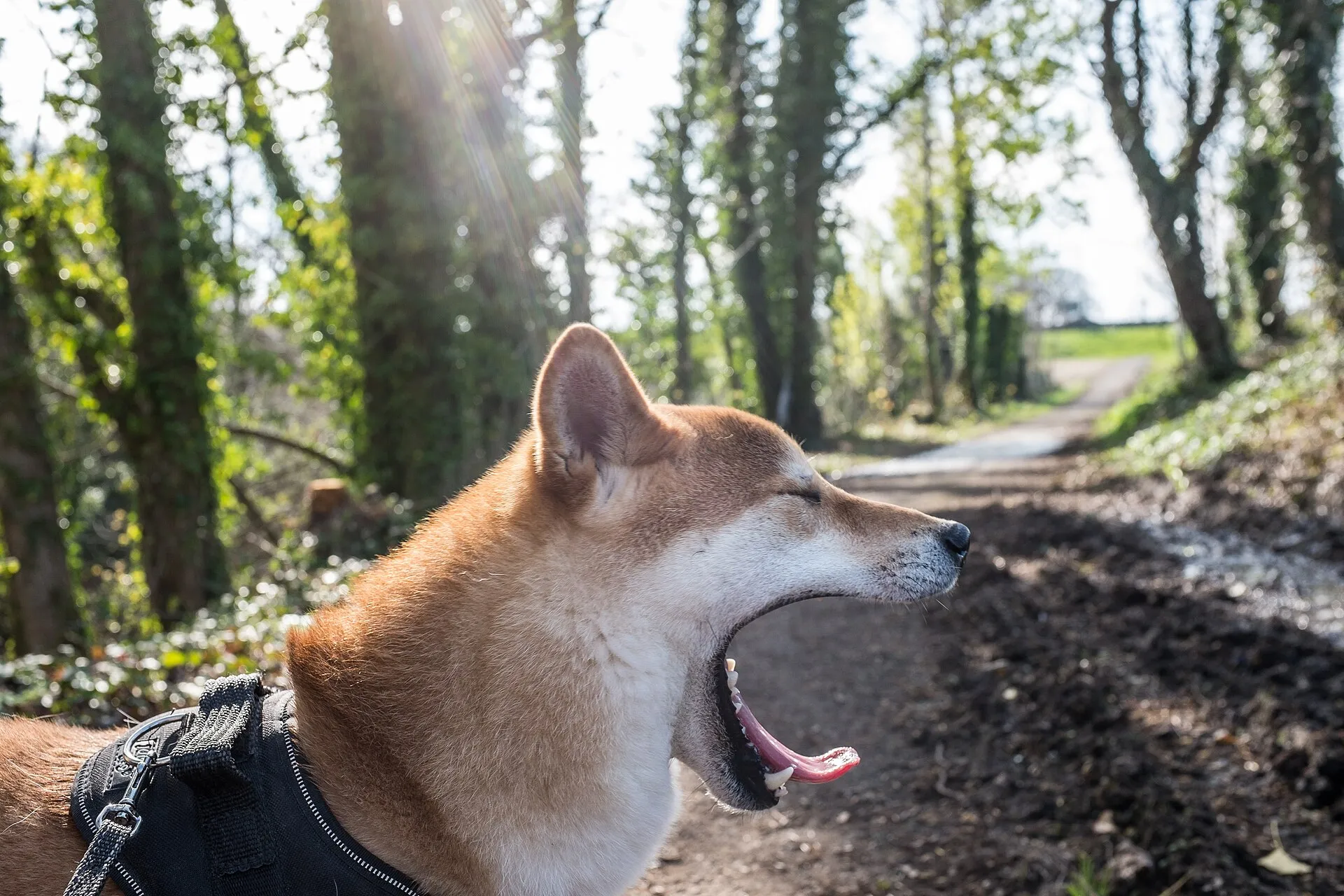
That 12.5% is almost certainly an underestimate. It only counts dogs where a vet recorded the diagnosis during that year, and the study authors point out that dogs hide dental pain well and owners often put the signs down to ageing. You may have seen the claim that “80% of dogs have dental disease by age three.” It’s widely repeated, but we couldn’t trace it to a clear, citable study, so we don’t rely on it.
The same study found some clear risk factors:
- Small dogs: dogs under 15 kg (33 lb) were about 2.5 times as likely to be affected as dogs weighing 30–40 kg (66–88 lb).
- Older dogs: dogs aged 8 and over were more than three times as likely to be affected as dogs aged 2–4.
- Certain breeds: the highest rates were in Greyhounds (32%), King Charles Spaniels (30%), Toy Poodles (26%), Cavalier King Charles Spaniels (25%), Yorkshire Terriers (22%) and Border Terriers (22%).
If you share your home with a small, older dog of one of those breeds, dental care deserves a regular slot in your week.
What periodontal disease is and why it matters
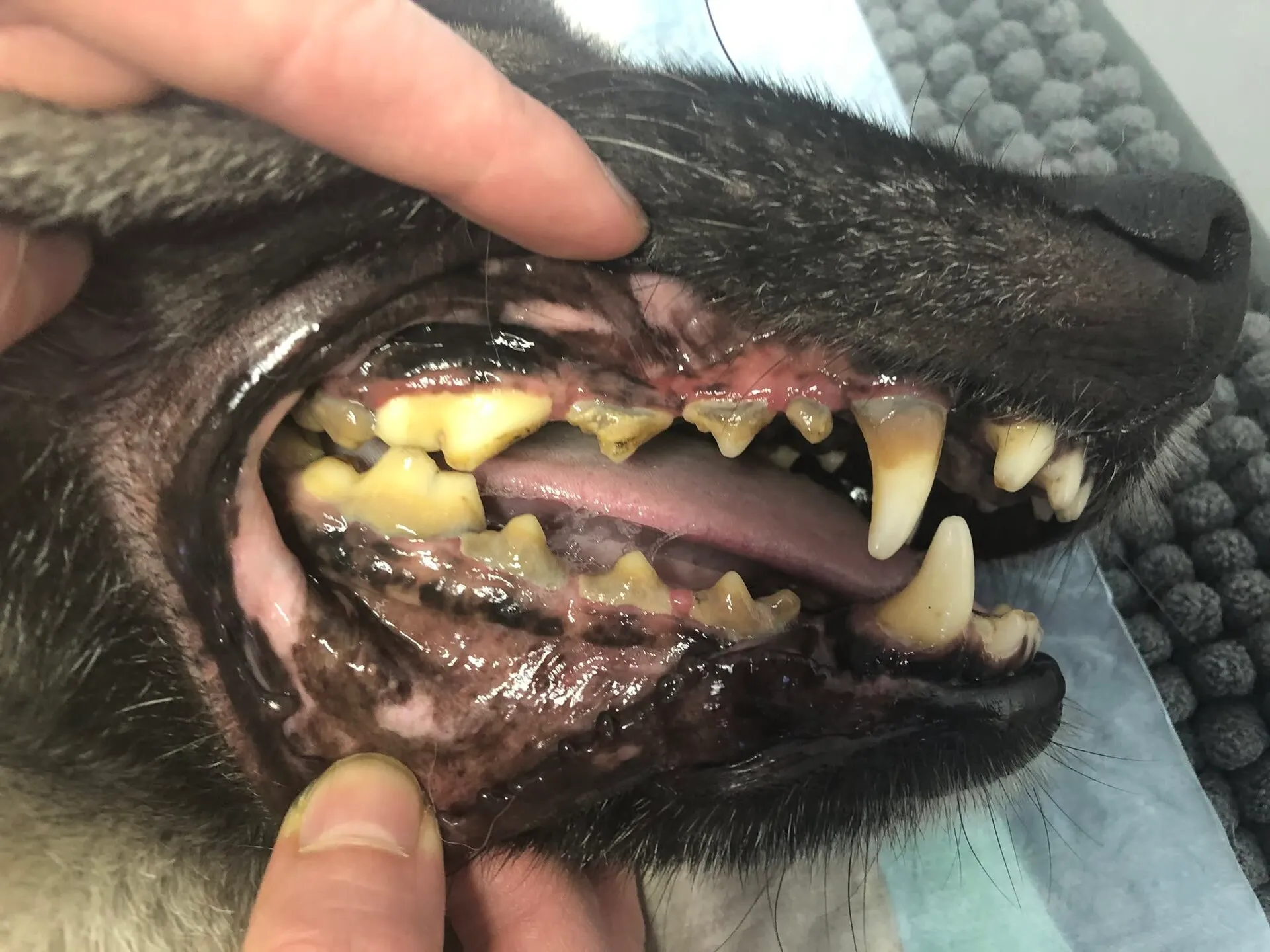
It starts with plaque, a sticky film of bacteria that builds up on teeth every day. If it isn’t removed, minerals in saliva harden it into tartar (calculus), the brown crust you can see near the gumline. Plaque and tartar irritate the gums and cause gingivitis: red, swollen gums that may bleed.
Over time the infection spreads below the gumline and destroys the tissues and bone that hold each tooth in place. Teeth loosen, roots become infected and abscesses form. It hurts, but dogs keep eating, so many owners don’t realise until a tooth falls out or the breath becomes unbearable.
Signs to look for:
- Bad breath that doesn’t go away
- Red or bleeding gums
- Brown or yellow tartar, especially on the back teeth
- Chewing on one side, dropping food or eating slowly
- Pawing at the mouth or rubbing the face
- Loose or missing teeth
- Swelling below the eye (can mean a tooth root abscess in the upper jaw)
How to brush your dog’s teeth, step by step
Brushing is the most effective thing you can do at home, because it physically removes plaque before it hardens. Colorado State University’s veterinary hospital recommends daily brushing and introducing it gradually over 1–2 weeks.
What you need
- A soft-bristled toothbrush (an adult or child size suits most dogs), or a silicone finger brush for small mouths. One brush per dog.
- Pet toothpaste. Many contain enzymes and come in flavours dogs like.
- Small treats, and a time of day you can stick to.
Never use human toothpaste. Some contain xylitol (also called birch sugar), which the US FDA warns can cause a dangerous drop in blood sugar in dogs. Dogs also swallow toothpaste instead of spitting, so ingredients meant for rinsing out end up in the stomach.
Days 1–3: get your dog comfortable with handling
- With your dog relaxed, gently lift the lip for a second or two, then give a treat.
- Touch the outside of the teeth and gums with a finger. Keep sessions under a minute.
- Let your dog lick a little toothpaste off your finger.
Days 4–7: introduce the brush 4. Let your dog sniff and lick toothpaste off the brush. 5. Lift the lip and brush one or two of the big canine teeth for a few seconds. Reward and stop. 6. Each day, add a few more teeth.
Week 2 onwards: the full routine 7. Lift the lip so you can see the teeth and gumline. 8. Angle the bristles at about 45 degrees towards the gumline. 9. Use light pressure and small back-and-forth or circular strokes. CSU suggests around three strokes per tooth or section. If the bristles flatten or splay, you’re pressing too hard. 10. Focus on the outer surfaces of all the teeth, which is where CSU’s guide concentrates. Don’t forget the big upper back teeth, which are easy to miss because they sit under the cheek. 11. Take short breaks for praise, then finish the mouth. The whole job takes about a minute or two once your dog is used to it.
If your dog’s gums bleed a lot, the mouth seems painful, or your dog suddenly resists brushing, stop and see your vet. Brushing a sore mouth hurts and teaches your dog to hate the toothbrush. Brushing also can’t remove tartar that has already hardened; that needs a professional clean.
What “VOHC accepted” means
Pet shops are full of dental chews, water additives, gels, sprays, wipes and special diets, and the marketing claims are hard to judge. The Veterinary Oral Health Council (VOHC) offers one way to sort them.
The VOHC is a US-based group of veterinary dentists and dental scientists. It doesn’t test products itself. Manufacturers submit data from trials run to VOHC’s protocols, and if the results show a meaningful reduction in plaque, tartar, or both, the product can carry the VOHC Seal of Acceptance.
Some practical points:
- Check what the seal covers. Each product on the VOHC list is accepted for plaque, tartar, or both. Plaque is the bacterial film that inflames the gums, and tartar is plaque that has hardened, so a product that tackles both is covering more ground.
- Check the list, not just the packet. The current accepted products list is on vohc.org, with separate sections for dogs and cats. It includes dental diets, edible chews, water additives, gels, sprays, toothpastes, toothbrushes and wipes.
- The list is US-centred. Many VOHC-accepted products are sold worldwide, but some brands and formulas differ between countries. If a product sold in your country doesn’t carry the seal, it isn’t necessarily useless, but there’s less independent evidence behind its claims.
- Products help, brushing helps more. Treat accepted chews and additives as extras alongside brushing, not substitutes.
Feed dental chews according to the packet for your dog’s weight, count them in the daily calorie allowance, and supervise. Dogs that gulp chews whole get far less benefit and can choke.
Chews that break teeth
Broken teeth are common in dogs, and hard chews are a big reason why. A Vet Times review notes that the canine teeth and the large upper carnassial teeth (upper fourth premolars) are the ones most often fractured. It reports veterinary dentists seeing more fractures in dogs that chew antlers and nylon bones, though it’s candid that this is expert opinion, the lowest level of evidence, rather than a controlled trial.
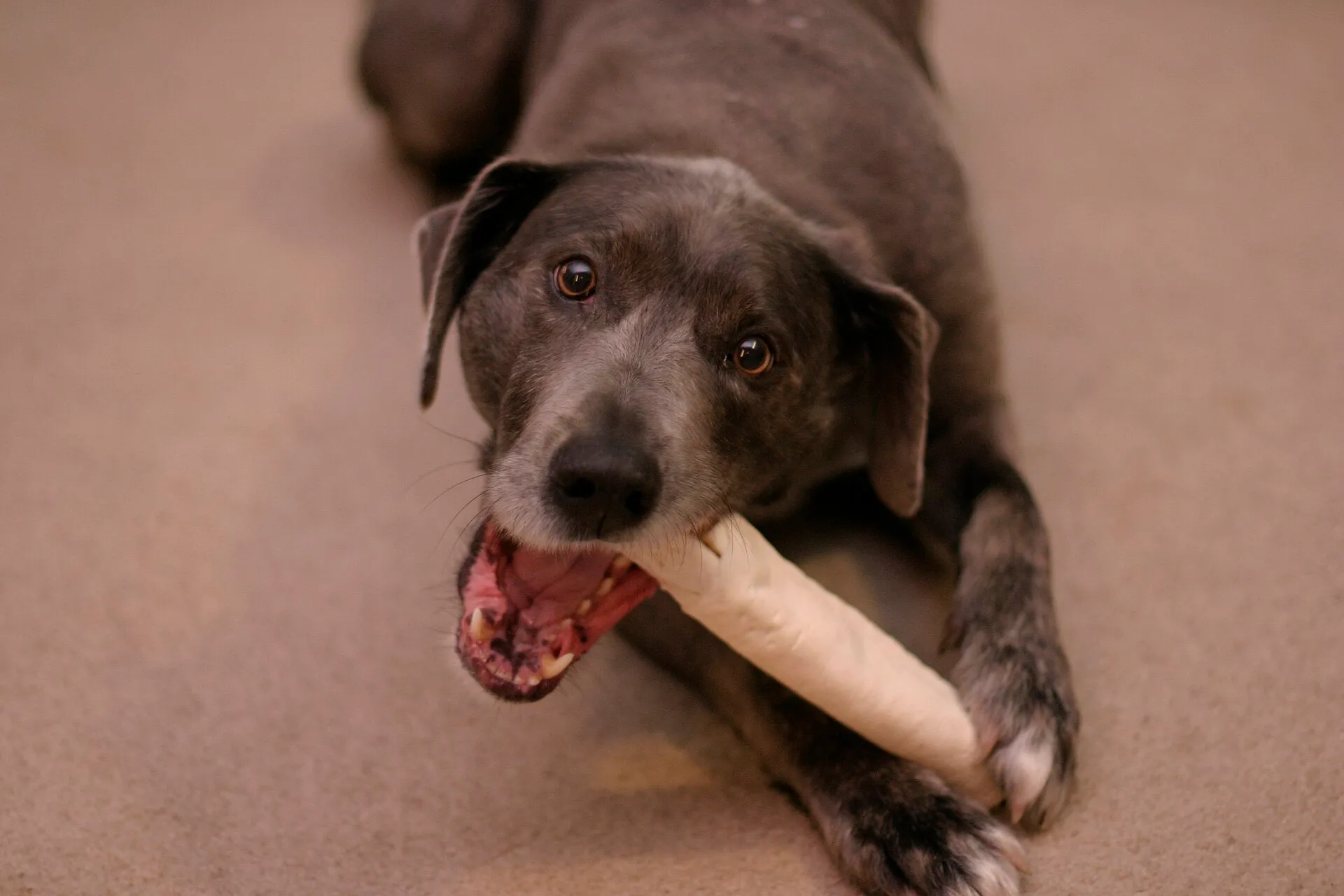
The chews most often linked with fractures:
- Antlers (deer, elk)
- Real bones, raw or cooked, including marrow bones and knuckle bones
- Hard nylon or plastic bones
- Cow hooves and other very hard animal parts
- Rocks and stones, for dogs that like to carry or chew them
Cooked bones also splinter and can cause choking and blockages, which is a separate reason to avoid them.
A simple test the same review recommends: if you can’t dent the chew with your thumbnail, it’s too hard for your dog’s teeth. Some vets add a second test: if it would hurt to be hit on the kneecap with it, it’s too hard.
A fractured tooth that exposes the pulp, the living tissue inside the tooth, is painful and can become infected. It needs treatment, usually root canal therapy or extraction, even if your dog is still eating normally.
Safer options include chews that bend, flex or can be dented, and VOHC-accepted dental chews sized for your dog. Supervise any chew, and throw it away once it’s small enough to swallow whole.
Professional cleaning under anaesthesia
A professional dental cleaning, sometimes called a “dental” or COHAT (comprehensive oral health assessment and treatment), is done under general anaesthesia. According to the AKC, a proper procedure includes:
- A full examination of the mouth, with probing around every tooth to measure pockets in the gum
- Dental X-rays of the whole mouth, which show problems in roots and bone that look normal from above
- Scaling of all tooth surfaces, including below the gumline
- Polishing to smooth the teeth so plaque has less to cling to
- Any treatment needed, such as extractions, at the same time
Anaesthesia is what makes this possible. As the Australian Veterinary Association explains, X-rays need a dog that keeps still, and probing and cleaning under the gums is painful when done properly.
Many owners worry about anaesthesia, especially in older dogs. No anaesthetic is risk-free, but pre-anaesthetic checks (often including blood tests), tailored drug choices and monitoring during the procedure reduce the risk considerably. Ask your vet how they assess and monitor older patients. Advanced dental disease is itself a long-term source of pain and infection, so delaying treatment isn’t a risk-free choice either.
How often a dog needs professional cleaning depends on the breed, age, diet and how well home care goes. Some small breeds need one every year. Some larger dogs with good brushing habits go years between them. Costs vary widely by country, clinic and how much treatment is needed: X-rays and extractions can increase the bill considerably, so ask for a written estimate with a range. Dental cover also varies a lot between pet insurance policies; some exclude it, and some only cover dental injury or require regular dental checks.
Anaesthesia-free dental cleaning: why vets advise against it
Some groomers and mobile services offer “anaesthesia-free” cleaning, where tartar is scraped off while the dog is awake and restrained. It’s cheaper and sounds gentler, but veterinary dental organisations are firmly against it.
- The American Veterinary Dental College strongly opposes it, describing it as inappropriate, according to the AKC.
- The Australian Veterinary Association states that anaesthesia-free dentistry on dogs and cats is not appropriate and is at best cosmetic.
The reasons are practical. Periodontal disease lives below the gumline, and cleaning there properly is uncomfortable and impossible on a conscious dog. Without X-rays and probing, abscesses and bone loss are missed. Scraping without polishing leaves rough tooth surfaces that collect plaque faster. A dog with white front teeth can look fine while infected roots go untreated, which gives owners false reassurance. Restraint also risks injuries, stress and bites.
See a vet now if:
- Your dog has a broken tooth
- There’s swelling on the face or under an eye
- Your dog has stopped eating, is drooling heavily or is pawing at the mouth
- The gums are bleeding a lot or there’s pus
- A tooth is loose or has been knocked out after an injury
- Your dog yelps when eating or when you touch the mouth
The bottom line
Periodontal disease is the most commonly diagnosed problem in UK dogs, and small, older dogs carry the most risk. Daily brushing with pet toothpaste is the best defence, and most dogs will accept it if you build up over a couple of weeks. Skip antlers, bones and hard nylon in favour of chews you can dent with a thumbnail, and look for the VOHC seal when you buy dental products. When your vet recommends a cleaning, choose one done under general anaesthesia with X-rays, because that’s the only kind that reaches the disease below the gumline.
Questions owners ask
How often should I brush my dog's teeth?
Daily is ideal, because plaque builds up every day and is only easy to remove before it hardens into tartar. If daily isn't realistic, brush as often as you can and ask your vet about VOHC-accepted products to fill the gaps.
Can I use human toothpaste on my dog?
No. Some human toothpastes contain xylitol, which is dangerous to dogs, and dogs swallow toothpaste rather than spitting it out. Use a toothpaste made for pets.
Are antlers safe for dogs to chew?
Veterinary dentists generally advise against antlers, real bones and hard nylon chews because they are harder than teeth and are a common cause of fractured teeth. A safer chew is one you can dent with your thumbnail.
Is anaesthesia-free dental cleaning a good alternative?
Veterinary dental bodies including the American Veterinary Dental College and the Australian Veterinary Association say no. It only removes visible tartar and can't clean or check below the gumline, where periodontal disease actually does its damage.
Do dental chews replace brushing?
No. Chews and other products with the VOHC seal have evidence that they reduce plaque or tartar, but they work best as an add-on to brushing, not a replacement.
Sources
- Royal Veterinary College VetCompass: Epidemiology of Canine Periodontal Disease
- Colorado State University Veterinary Health: How to Brush Your Dog's Teeth
- Veterinary Oral Health Council (VOHC)
- VOHC: Accepted Products
- Vet Times: Exploring Tooth Fracture Risks in Canine Patients
- Australian Veterinary Association: Anaesthesia-free Dentistry in Dogs and Cats
- American Kennel Club: Anesthetic-Free Dental Procedures for Dogs
- US FDA: Paws Off Xylitol; It's Dangerous for Dogs
This guide is general information, not a substitute for advice from a vet who has examined your dog. Every claim is checked against the sources above. How we research and fact-check. Spotted an error? Tell us.